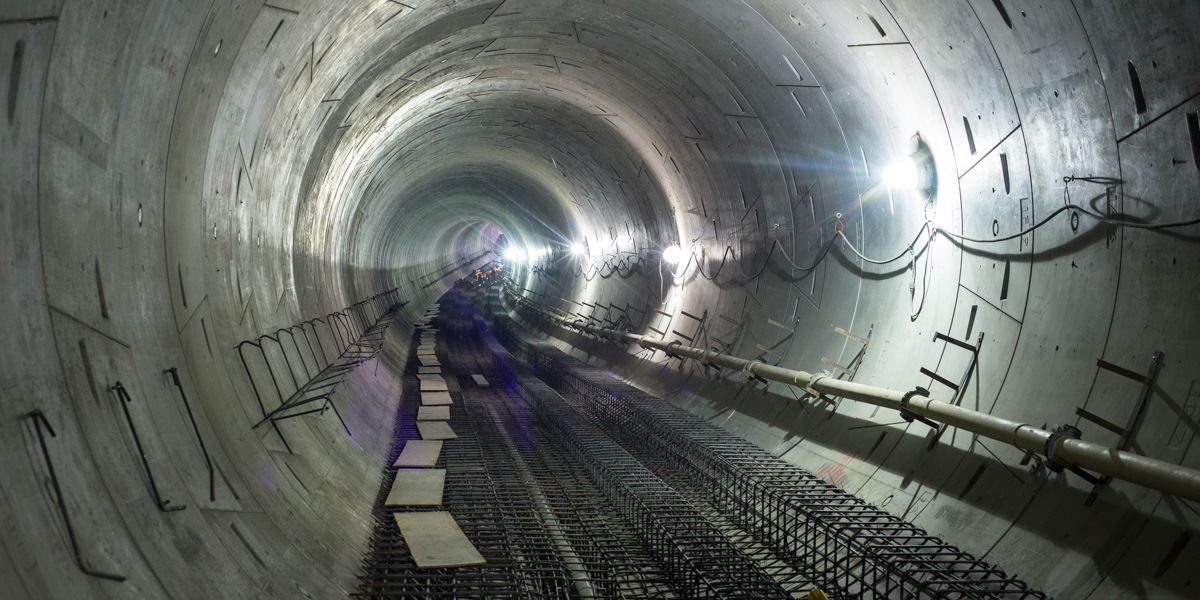

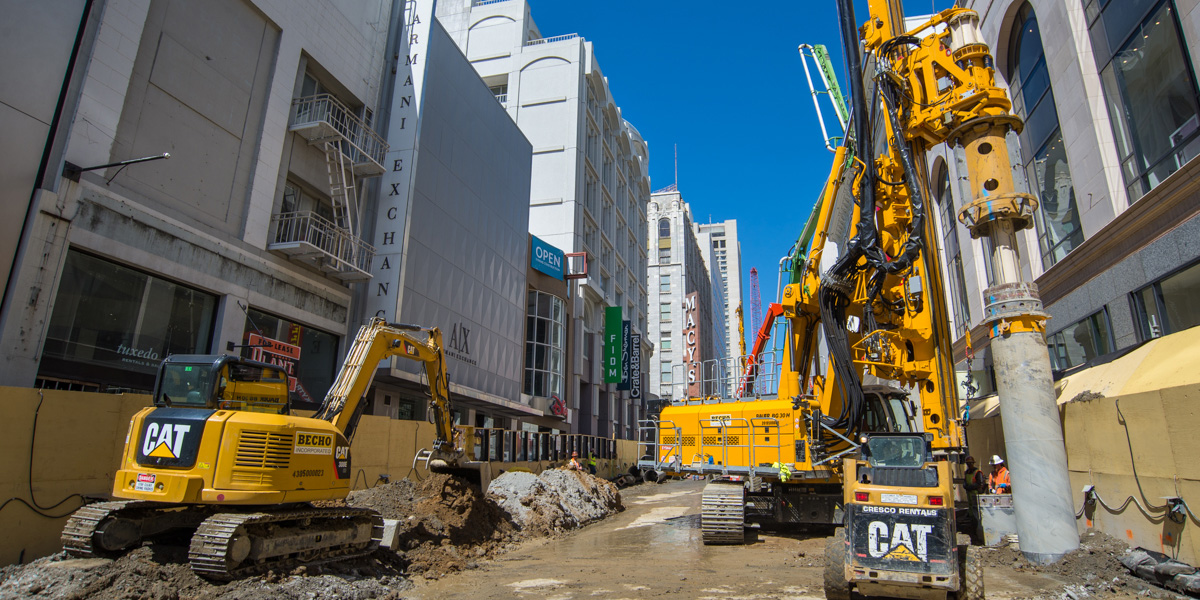
The Stations, Surface Track, and Systems Project comprised Phase 2 of the overall Third St. Light Rail Transit Project. This endeavor provided rail service for regional destinations such as Union Square, Moscone Convention Center, Yerba Buena, and AT&T Park, as well as to connect directly to BART and Caltrain, the Bay Area’s two largest regional commuter rail services. The project included a twin bore tunnel alignment of approximately 1.7 miles, plus a short surface segment to connect to Fourth and King Station, the current terminal station for the Third Street Line. It has three underground stations: Moscone Station, Union Square/Market St. Station, and Chinatown Station. An above-ground station was also added at Fourth and Brannan.
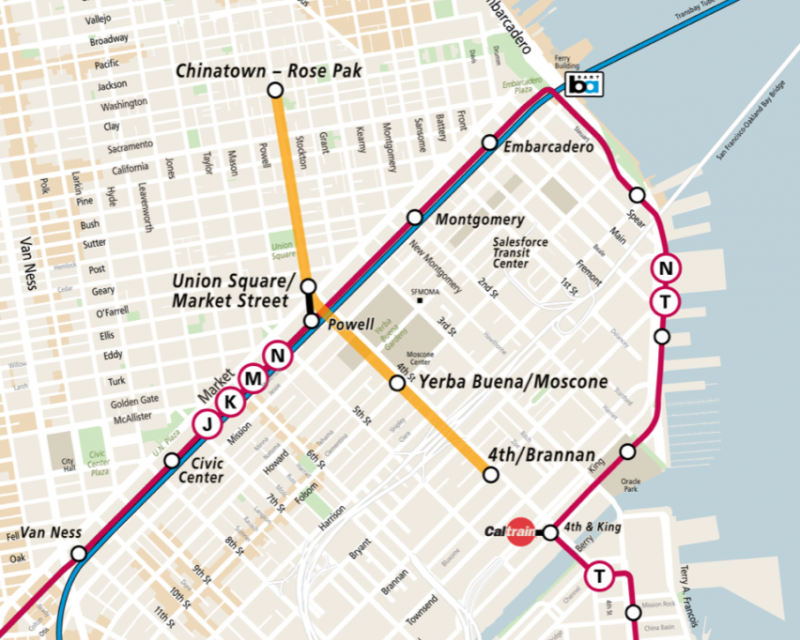
B&C Transit Inc. was responsible for the providing engineering services to advance the preliminary engineering design prepared by others to final design as well as prepare Contract Documents for the Surface, Track and Systems Contract. The scope of work included the surface segment, tunnel segment, and system-wide communication elements. Work on the surface segment included construction of the surface station, utility relocation, pavement renovation, and traffic signal revisions. In the tunnel segment contract scope included track invert and drainage and a walkway. System-wide elements of work for the entire project included trackwork, mechanical systems, communications systems, electrical lighting and power, overhead contact system and associated parallel feeders, Advanced Train Control System (ATCS) for the subway, and surface signaling. The mechanical systems that were installed included plumbing, fire protection, and emergency ventilation. The communications systems that were installed included fiber backbone network, Supervisory Control and Data Acquisition (SCADA), fire telephones, emergency telephones, Mayor’s emergency telephone, Closed-Circuit Television (CCTV), and Radio. All of the new systems were integrated into the new Transportation Management Center (TMC), another project where B&C Transit Inc. played a major role.
Furthermore, B&C Transit Inc. was also responsible for program integration to ensure that designs performed by the multidisciplinary engineers and architects under the contract resulted in a fully integrated and operational system. Duties included preparation of an integration matrix to identify interface points between work covered under the various construction contracts, monitoring progress of interface coordination between designers to ensure that design requirements are conveyed and understood, and coordinating sign-off by discipline designers to verify that appropriate design requirements are incorporated into the Contract Documents.